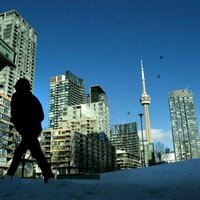


Ontario frames its latest budget as a response to the turbulent trade climate driven by U.S. tariffs, but some experts say it comes up short on funding for people and the environment.
Finance Minister Peter Bethlenfalvy calls it a "plan to protect Ontario" with provisions to help workers and businesses facing tariffs, to "unleash the economy" with support for manufacturing, to lower costs for families, and to deliver better services.
His fiscal outlook recalls past crises like the COVID-19 pandemic and rising interest rates, but warns the province "now faces one of its greatest challenges" in the form of U.S. tariffs.
Ontario says the ensuing economic certainty threatens to undermine 2024's "solid gains" in job growth and GDP. The government forecasts a $6-billion deficit for 2024-25, growing to $14.6 billion next year, and $7.8 billion in 2026-27 before returning to a slim projected surplus by 2027-28.
But critics say the budget is short-sighted for handing out benefits to businesses-without spelling out how those measures will benefit people-while neglecting support for everyday Ontarians and the environment, with long-term consequences to come.
In some ways, the budget is notable for what it didn't include, writes Brian Lewis in The Trillium. Climate change almost isn't mentioned, except in reference to green bonds, and poverty is unaddressed despite rising affordability challenges.
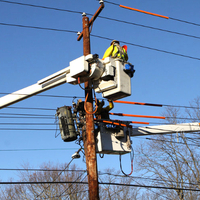
It includes $6.46 billion for taxpayer-funded subsidies feeding "electricity cost relief programs," but critics have noted those serve wealthy households and sustain high electricity use when consumption cuts would better serve the grid.
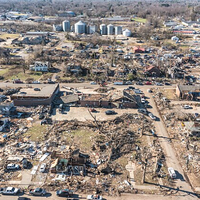
The Narwhal reports Ontario budgeted support for "new pipelines connecting Alberta oil to new refineries" and $92 million toward electric vehicle charging infrastructure. But it reduced its "meagre" emergency preparedness funding-just one month after nearly a million Ontarians lost power due to an ice storm.
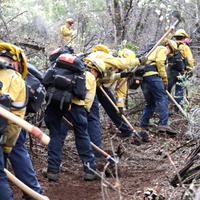
The government also decreased its budget for emergency forest firefighting-a move that troubled John Vanthof, MPP for the northern riding of Timiskaming Cochrane, reports Timmins Today. Vanthof said that though firefighting budgets fluctuate, "the base budget shouldn't," as there is a consistent need "to have enough planes, enough staff, and enough resources ready."
"Cutting that base is dangerous for Northern Ontario," Vanthof said.
Bethlenfalvy said the government has a contingency fund to cover such things, but it doesn't appear in the budget.
Ontario allocated funds for mining and the supply chains for critical minerals that are often located on First Nations territories, but the word "reconciliation" only appears in the budget twice, said the Chiefs of Ontario. The budget repeats the word "mineral" 63 times, and refers to the mineral-rich Ring of Fire 16 times. The chiefs welcomed the potential to increase mining capacity among First Nations, but also said they remain disappointed to see "no tangible commitments made into other key sectors for First Nations, such as mental health services, child and family services, and environmental initiatives."
They also raised concerns that recently tabled legislation, Bill 5, the Protect Ontario by Unleashing Our Economy Act, "will run roughshod over First Nations rights."
While the latest budget contains some wins for the clean economy, it falls short of ensuring long-term affordability by weakening green building standards in its haste to spur more housing development, says Clean Energy Canada.
Stand.earth writes that the proposed Bill 17, the Protect Ontario by Building Faster and Smarter Act, could undermine municipal green building rules. The Atmospheric Fund similarly warns that the bill will limit "cities' abilities to plan for growth," risking long-term impacts on affordability "by exposing homeowners, tenants, and building owners to spiraling energy costs and the increasing impacts of extreme weather and climate change."
The budget continues a long-term trend of underinvesting in line items for the everyday living of Ontario residents, like health and education, write Ricardo Tranjan and Ryan Romard for Policy Options. "Despite the serious challenges of the past years, Ontario remains the province that spends the least on its people, on a per-capita basis."
Source: The Energy Mix