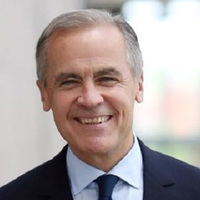



Last week's cabinet announcement put Francois-Phillipe Champagne back in the role of Minister of Finance. With Champagne's success building Canada's electric vehicle industry, his regular appearances at sustainable finance conferences, and Prime Minister Mark Carney's background as United Nations Special Envoy for Climate Action and Finance, this leadership team brings significant climate finance expertise to the government.
Carney's previous work on climate finance gives us a good sense of what we can expect from his government, and where to push for more. Last May, appearing before the Senate Banking Committee as chair of Brookfield Asset Management Inc., the future PM outlined four pillars of climate finance: disclosure, net-zero transition plans, taxonomies that provide common definitions of transition finance, and scenario planning.
With Carney at the helm, we can expect swift progress on Canada's sustainable finance taxonomy, first introduced in 2021 but yet to be designed. He is an outspoken supporter of the taxonomy framework, making a platform promise to deliver the full framework by the fall of 2026. It remains to be seen if the Prime Minister will follow the same taxonomy path outlined by former Finance Minister Chrystia Freeland, whereby an external body would write and govern the taxonomy at arm's length from the government. Our recommendations remain the same: the taxonomy must be developed in collaboration with the Minister of Environment, climate finance experts, labour experts, and Indigenous rights holders, and align with limiting warming to 1.5C-or else not exist.
The Prime Minister's perspective on transition finance emphasizes continued fossil fuel financing, particularly for decarbonization technologies like carbon capture and storage (CCS). This rhetoric has intensified amid trade tensions with the United States, with the Canadian economist confirming just last week his intentions to expedite energy project approvals, including oil and gas. Whether this leaves CCS and liquified natural gas (LNG) with a "sustainable investment" label remains to be seen.
Strengthened disclosure requirements will likely be another priority. Carney has a demonstrable reverence for climate disclosures, with the view that "any efficient market reaction to climate change risks as well as the technologies and policies to address them must be founded on transparency of information."
Over the last year, the government has committed to altering the Canada Business Corporations Act to require climate-related financial disclosure from some companies, while the Canadian Sustainability Standards Board (CSSB) has published its final disclosure standards. Carney is critical of Canada's slow movement towards mandatory disclosure, with a focus on how the CSSB framework arbitrarily lags Canada behind the European Union by several years. We can certainly expect the new finance ministry to work with various regulators to adopt, or even build beyond, the CSSB standards.
Beyond all else, action is needed on top of disclosure. In the Liberal Party platform, Carney indicated plans to require large federally-regulated corporations to produce credible climate transition plans by 2027. But disclosure is like asking companies to count the holes in a sinking ship. Transition plans are about making them figure out how to plug those holes.
As this government begins its work, Canada stands at a pivotal moment for climate finance. The platform commitments to transition plans, taxonomy, and disclosure are important first steps, but they're insufficient on their own. The previous parliament saw calls for comprehensive legislation like the Climate-Aligned Finance Act to use all available tools to align Canada's financial system with the Paris climate agreement. Similar ambition must be reintroduced, so Canada can position itself as a leading destination for climate-aligned capital in North America.
Success will ultimately depend on whether these frameworks prioritize genuine emissions reductions and clean energy, or just prolong fossil fuel dependence through economic and technological boondoggles like LNG or CCS. With Champagne's industry experience and Carney's international climate finance background, this government has both the expertise and the opportunity to align Canada's economic ambitions with its climate obligations. To do so, it must not lose sight of the 'climate' in climate finance.
Source: The Energy Mix