

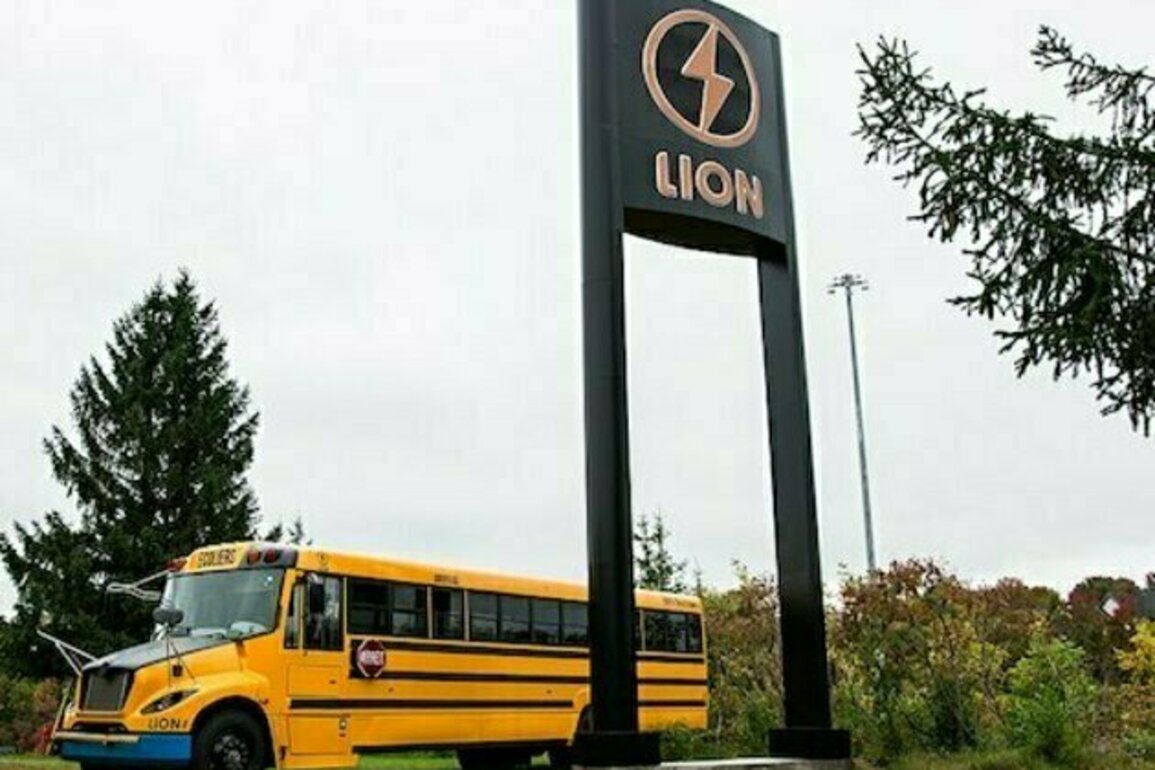
One iconic Canadian clean energy upstart got a new cash infusion last week while another one slid closer to bankruptcy, as St. Jerome, Quebec-based Lion Electric announced it had lined up new investors while Toronto-based Li-Cycle Holdings began dissolution proceedings in Canada and the United States.
Li-Cycle's battery recycling operations in Germany and Switzerland will continue, Sustainable Biz reports, but the company will shut down its business in Asia as well as North America.
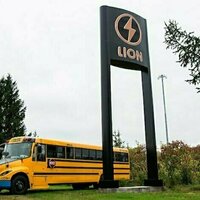
On Thursday evening, Lion Electric said it had reached a "definitive agreement" with a group of Quebec investors for its electric bus manufacturing operation, the Globe and Mail writes. The new consortium includes serial entrepreneur and former Lion board member Pierre Wilkie and Montreal real estate magnate Vincent Chiara.
The Superior Court of Quebec is scheduled to review the deal May 21.
Earlier this month, Lion looked like it was on its way to liquidation when the Quebec government refused any further public funds after investing tens of millions of dollars in the company. Jean-Francois Nadon, a restructuring specialist with Deloitte, said Lion laid off all but 12 of its employees after the government announced its decision, was still able to pay its remaining staff, but could not come up with May 1 rent for all of its locations, totalling about $400,000.
Now, the Wilkie consortium has "agreed to provide new capital, bolstered by the renewal of a provincial government subsidy program that offers incentives to buyers of electric buses," the Globe says. The new owners will take the company private, with a more modest business plan likely focusing on electric school bus manufacturing in St. Jerome.
"Retail shareholders will probably be wiped out," the Globe writes, "while other investors could also lose the bulk of their holdings."
In Toronto, meanwhile, Li-Cycle announced it would begin selling off its assets after filing for bankruptcy protection in Canada, Reuters reports. Its U.S. operations are also shutting down in New York State. In late April, the company announced it had suspended operations at several of its production facilities after an acquisition deal with mining behemoth Glencore PLC, its biggest secured creditor, fell through.
"The company's Arizona and Alabama factories are halting operations to save cash, leaving about 85 employees furloughed, along with 32 at the firm's Toronto headquarters," The Logic reported at the time, and CEO Ajay Kochhar was expected step down as of May 15.
Reuters says Li-Cycle "kept running into cost overruns and technical issues" after securing a financial lifeline for its Rochester, New York facility last November, in the form of a US$475-million loan from the U.S. Department of Energy. Now, Li-Cycle has accepted a $10.5-million debtor-in-possession deal with Glencore that will allow it to keep operating while it restructures, along with a $40-million stalking horse credit bid from the UK-based mining behemoth.
Sustainable Biz traced the history of Glencore's partnership with Li-Cycle back to a $200-million investment in May 2022. But after that, construction at the Rochester plant that Kochhar had described as a "cornerstone asset" ran into cost overruns. After Glencore poured another $101 million into the company in March 2024, Li-Cycle cut 17% of its global work force and shifted its management model in search of efficiencies.
"The problems faced by Li-Cycle are not unique to the company," Sustainable Biz wrote at the time. "The sector in Canada has hit major snags, including both Umicore and E-One Moli pausing plans for their battery factories and Ford withdrawing from its partnership with SK and EcoPro on a $1.2-billion battery plant in Becancour, Que."
The news story said key factors have included "the challenges of building up a new industry, and an electric vehicle market that has not been growing at the rapid pace some companies expected," along with "the U.S. government that has acted on its opposition to clean energy projects and the shift to protectionism in global trade."
Source: The Energy Mix