

The Climate Emergency Unit (CEU) launched in January 2021 as a five-year project to advance the emergency policy ideas proposed in Seth Klein's 2020 book A Good War: Mobilizing Canada for the Climate Emergency. As the CEU wraps up its mission, Klein sat down with The Energy Mix to reflect on the project's legacy for the climate movement, and for Canada as a whole.
This interview has been edited for length and clarity.
Thinking back to January 2021, can you paint us a picture of what you set out to accomplish with the CEU?
I had recently published this book called A Good War, Mobilizing Canada for the Climate Emergency and I had a lot of climate emergency ideas. And I had started to meet with political leaders to discuss those ideas, which were kind of fun meetings, but nothing ever came of them. Because it's the nature of politics that nothing comes out of such things unless they are really backed up by a drumbeat of political pressure.
And I knew I wanted to stay engaged in trying to advance those ideas. So after a little conversation, David Suzuki and Tara Cullis gave me this home in the David Suzuki Institute to launch this initiative that we called the Climate Emergency Unit.
It was always intended to be a time-limited project. We wanted to try to sound the emergency alarm, and to press our own movement out of incremental mode, and out of what's often a very insider, technocratic discussion with policy-makers. And to push for solutions at the scale of what we face.
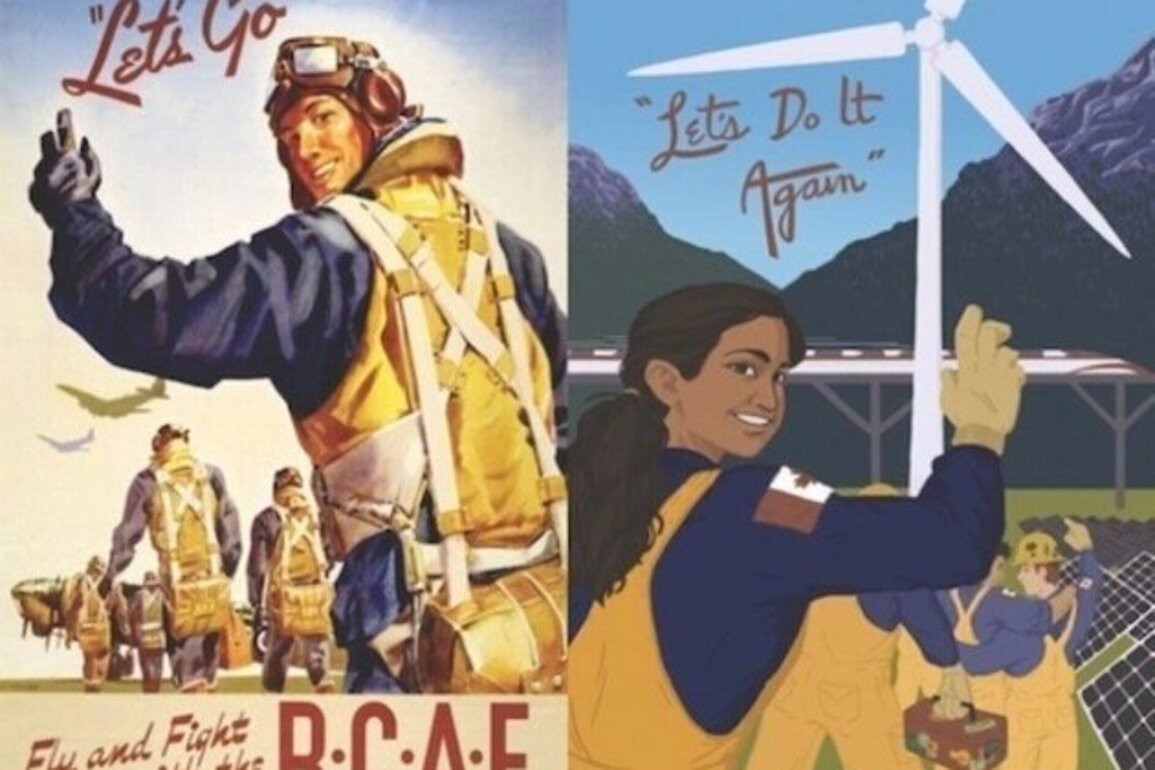
For those who know my book, it's structured around lessons from the Second World War as another society-wide mobilization with some lessons to offer. Similarly, the CEU's mission was to mobilize, to press for emergency legislation and policies that would not simply bend the curve, but dramatically bend the curve on Canada's greenhouse gas emissions.
There are a lot of good groups out there organizing individuals. But our task wasn't to organize individuals. Our task was primarily to organize organizations, to bring other organizations together at coalition tables and to cajole them to join these emergency campaigns and build that drum beat.
What you would say are the most important things the CEU has accomplished over the past five years?
Well, first of all, I would say that, by and large, our project wasn't successful. Part of the ethos we wanted to bring was: to truly hit speed and scale, it required state leadership and new public programs and institutions to drive down our emissions.
And I-kind of cautiously, optimistically, at the start of the five years-thought that by the end of the five years, we, in coalition with others, would be successful at winning some of those. And we have not been.
The closest we came was with the Youth Climate Corps, which was the one concrete policy win, with the most recent federal budget announcing $40 million of funding for a YCC. It's a win, but it's not nearly at the scale of what we were advocating for. We were calling for a billion dollars a year. And it remains to be seen what form it takes. Are they truly going to lean into creating a new public institution? Or are they going to default to writing a cheque for somebody else to do it? I remain nervous about that.
But we did have other more nuanced successes. Part of our ethos was that no group wins anything alone. We tried to hardwire the importance of coalition-building into our DNA. We made a point of not wanting to build our own brand, and we made a point of amplifying the good work of other groups to model some of that solidarity.
In the end, the most significant thing that we'll leave behind is our six markers of emergency framework, derived from the book, but really refined with the CEU team. It guided the selection of the campaigns, where we put our time, it was embedded in every workshop and talk that we gave-and we've given a few hundred over the five years.
In the last few months of the CEU's run, we've intentionally created final legacy items as a service to leave behind for the movement. So we've left behind this great 12-minute video about the six markers framework [video]. And we've had this really good podcast, hosted primarily by Erin Blondeau over the past year and a half. Our final six episodes are a special series on the six markers of emergency. It's like a six-hour course on the markers, with each episode a deep dive into what it means, what it looks like, the historical examples of when we've actually practiced it, and what it could mean in the future, when we actually get serious about meeting this emergency.
Our hope is that we're not just leaving behind certain practical wins, but also leaving behind a way of thinking about and approaching emergencies. And we hope our movement partners will use this. It's a framework for assessing official government plans but also for thinking about what we need to press for.
What about the model itself, and the tenets you've outlined for how the CEU operated? Is that something you'll carry forward into whatever's next for you, and would you encourage others to use it?
Well, I would certainly encourage other organizations to think about it. The model doesn't work for everything. I mean, our movement needs groups and organizations that are around for the long haul.
But I'm super happy that this is what we did. Even though it's closure, its end is bittersweet.
First of all, structuring it as a five-year project was deliberate. We wanted a model that communicated the message that we are in an emergency, and we need to accomplish some big things quickly.
It meant our administrative needs were very low. We had no admin staff, no HR staff, no fundraising staff. Everybody was virtually full-time in organizing and campaign mode. Secondly, it meant we didn't need to invest time building our brand, because what would be the point?
And that made the coalition work we wanted to do easier, because we were a safe space to bring people together; we weren't anyone's competition for brand recognition or recruitment of individual donors because we weren't doing any of that.
I think it allowed us to take risks and experiment a bit more, innovate a bit more. You know, if you're an ongoing organization with a large staff and you're worried about fundraising and maintaining their income ... for us, it was: 'What's the worst that could happen? We collapse? Well, we're going to collapse at the end of five years anyway.'
But I guess here is a lesson for everyone: all groups wrestle with how and when to say this campaign, or this tactic, isn't working-we should stop doing it. These things tend to take on a life of their own; there's a kind of a status quo bias to just keep doing what you do. And we were structurally set up to stop doing what isn't working.
On that note, can you think of targets you had at the beginning that felt like: 'This is an absolute, we need to win this by the end of the five years'? Did any of those change over the years?
Well, yes, because we initiated a bunch of things, in particular in our first couple of years, that didn't work, and we did have to abandon them.
We were trying to organize coalitions sectorally outside of the climate movement, like, in the faith sector, in the arts and culture sector ... and I would say those tables found that their constituencies needed to be eased into the topic in a way that was anathema with being in an emergency.
And then we had some other campaigns that just didn't work. We tried an Alberta Climate Corps campaign that didn't work. We had this big campaign on the Youth Climate Corps, and we ended up putting a lot of effort into that because it had traction. But that campaign had a sister campaign for a Just Transition Transfer, which was even more ambitious, for a brand new federal transfer to the provinces and territories to spend billions of dollars a year on climate infrastructure and training. We tried to build alliances with the labour movement and Indigenous groups and municipal leaders, with some success on all of those. But we just could not get any take-up federally because there was no response in the same way as there was with the YCC. The effort just petered out, which is too bad, frankly, because I still think that is essential to the larger win.
I think a big piece is because we have failed to make a compelling, hopeful, exciting counteroffer to workers in communities that feel reliant on fossil fuels. For us, the YCC and the Just Transition Transfer were potentially those counteroffers. But the YCC offering remains so pitifully small, and the JTT counteroffer is non-existent.
You know, we spent oodles of time on a sustainable jobs plan, and a Sustainable Jobs Act, which I think you'd be hard-pressed to find a worker in the fossil fuel sector that even knows the damn thing exists, let alone finds it compelling.
I'm not laying this just at the foot of the movement, it's at the foot of the federal Liberal government. Their lack of interest in making that counteroffer has meant that the other efforts were completely vulnerable to counterattack. And I think the consequence of that is now apparent to us, which is that all of those other efforts are being abandoned. And beyond the immediate climate movement, there isn't a natural constituency ready to defend those policies.
One of the things we most struggled with, and it was at the root of our lack of success, is the failure of imagination. When we met with political leaders, that was the wall we most often confronted. It wasn't that they didn't get climate, it wasn't that they're bad people. It wasn't that they were captured by industry, although sometimes they were. It was this failure of imagination. Or put another way, a lack of faith in our capacity to build and do big things.
And that's at the root of my book, right? I was trying to excavate an 80-year-old story as a reminder of what speed and scale could actually look like when you really embrace that ambition. We tried to bring that to our campaigns, and I think the CEU team members will bring that ethos to the rest of their work.
We experienced that barrier with political leaders, but also within our own movement. We all wrestle with the failure of imagination, because our sense of possibility is contained by what we know from experience, or from other jurisdictions. In Canada, we tend to have a very insular view; we look at what's going on in the United States and we tend not to look at what's going on in other countries that are kicking our ass on climate.
In the end, we had great support from the rest of the climate movement, you know, CAN-Rac [Climate Action Network Canada] and the Green Budget Coalition called for a YCC, and that was great. But it didn't come easily. It was not there initially. We had to work really hard to make the case and I do think that stems from the fact that we limit our imagination right out of the gate.
So, with that in mind, is having the federal government respond in this emergency manner still what needs to happen? Is that still possible?
Yes, because even though it's hard, and even though we were unsuccessful, I would not rethink that piece of it. I remain firmly of the view that unless and until the response is state-led at speed and scale, we're going to lose. We're going to fry.
So, we have to pivot in different ways, and we're always going to experience these ups and downs with the political winds. But, you know, the argument I made in my book was: we have to make a Green New Deal-esque offer that marries people's economic and cost of living realities with the climate fight, or we lose. And conversely, when we do marry these things, it's extremely powerful.
In the CEU's final report, team members talk about how being part of this project has completely changed their outlook, the way they organize, and also themselves, fundamentally in terms of what they believe about their power and their possibility. Would you consider that a win? Is that something you set out to do with this project?
Absolutely a win. Wins also need to be measured in the people.
When it comes to the YCC, it's not merely that we landed something in the budget. I think there's a few dozen young people who've had a transformative experience that they will hopefully carry forward in the rest of the work that they do, with an expectation of winning stuff.
As far as the team itself at CEU, first of all, they've been an incredible team. As much as we've lost on different things, it's been thoroughly-not just enjoyable, but precious working with a team as committed and talented as these people.
They have genuinely taken to heart that ethos of being ambitious and trying to lean into that emergency mindset as opposed to an incremental approach-to bring that audacity that we tried to bring to the YCC call, or the other campaigns. You know, they're all a lot younger than me, and I think it'll continue to inform their work going forward.
Have you run into anyone who's asked you whether the end of the CEU project means you're giving up on the climate emergency?
Well, not giving up, but I've certainly had people say, "Oh, you didn't really mean it, did you? You weren't really going to close it down." And I was like, well, no, we did mean it. It's important for movement friends to know that we've tried to close down the CEU in a very thoughtful and deliberate way, recognizing those campaigns that still had legs and should continue, will continue.
So, there are a lot of groups that sit around the table for the BC Climate Emergency Campaign, and they want it to continue. It will continue. Instead of the secretariat role being played by us, it's now going to move over to Dogwood. And Emiko Newman, who has led that campaign, will continue to lead that campaign.
Similarly, we weren't ready to close down the YCC campaign, even though it was in the budget, because it needs to be way more ambitious, and we're nervous that the government's going to make a hash of it and needs to be held to account. So the campaign will continue under the leadership of Bushra Asgar, and it'll be housed with Small Change Fund.
We've been a key partner in the campaign to ban fossil fuel advertising, but we made the case to CAPE [the Canadian Association of Physicians for the Environment] that they should lead it, and their leadership agreed that it was a great fit for them, and they will continue to lead that, and that campaign will continue.
Anjali Appadurai's work doing climate mobilizing in the South Asian diaspora and her work on the Fair Shares Project to increase Canada's commitment to international climate finance-she's built a coalition around that; it needs to continue, it will continue through another group that she created called the Padma Centre for Climate Justice.
So all of those things will continue, those core campaigns. But the unit won't.
I'm not giving up. And I want to stay involved in climate, but I've got to try something different. Because, as I say, I do think a lesson from the model is to stop doing what isn't working. And I want to figure out for myself what that might look like. It looks different for different people.
I never thought the odds were great that we were going to win. I said that to the team members when I recruited them. I said to them, "Thank you for signing up. It's a bit of a Hail Mary. The path to victory is very narrow. And we're probably going to lose. But what else can we do except do what we have to do in the company of other good people?"
And that's what we did. And that's what we all need to keep doing.
It helps us measure & strengthen the impact of our reporting.
Have more to say? Email [email protected]
Source: The Energy Mix