

The federal government has unveiled a set of final regulations to cut methane emissions from the oil and gas sector and landfills.
A federal document says the new rules for oil and gas operators, which expand on regulations introduced in 2018, strengthen leak detection and repair requirements and set new standards on venting.
The new rules apply to upstream production, processing, and transmission facilities in Canada's onshore oil and gas sector, including gas plants and pipelines.
The document says the regulations will be phased in starting Jan. 1, 2028, and will help the Canadian oil and gas industry with producing "low-methane intensity products and supporting long-term success in a technologically advanced, decarbonizing industry."
The government estimates it will see a cumulative greenhouse gas emissions reduction of 304 megatonnes of carbon dioxide equivalent between 2028 and 2040. Methane is a climate super-pollutant that carries about 84 times the global warming potential of carbon dioxide over the crucial 20-year span when humanity will be scrambling to get climate change under control.
The oil and gas sector is Canada's biggest emitter of methane, the main component of natural gas. The gas can escape into the atmosphere through intentional venting, unintentional leaks from equipment, and through inefficient burning.
New landfill methane regulations will also require owners and operators of regulated landfills to monitor the landfill surface, landfill gas recovery wells, and equipment used to control landfill methane emissions.
The federal government estimates landfills accounted for 17% of Canada's methane emissions and 3% of its greenhouse gas emissions in 2023. It says the regulations will allow for early detection of methane emissions and leaks that must be repaired within specified timelines.
By 2040, the regulations are expected to reduce greenhouse gas emissions by 100 megatonnes of carbon dioxide equivalent.
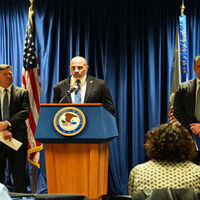
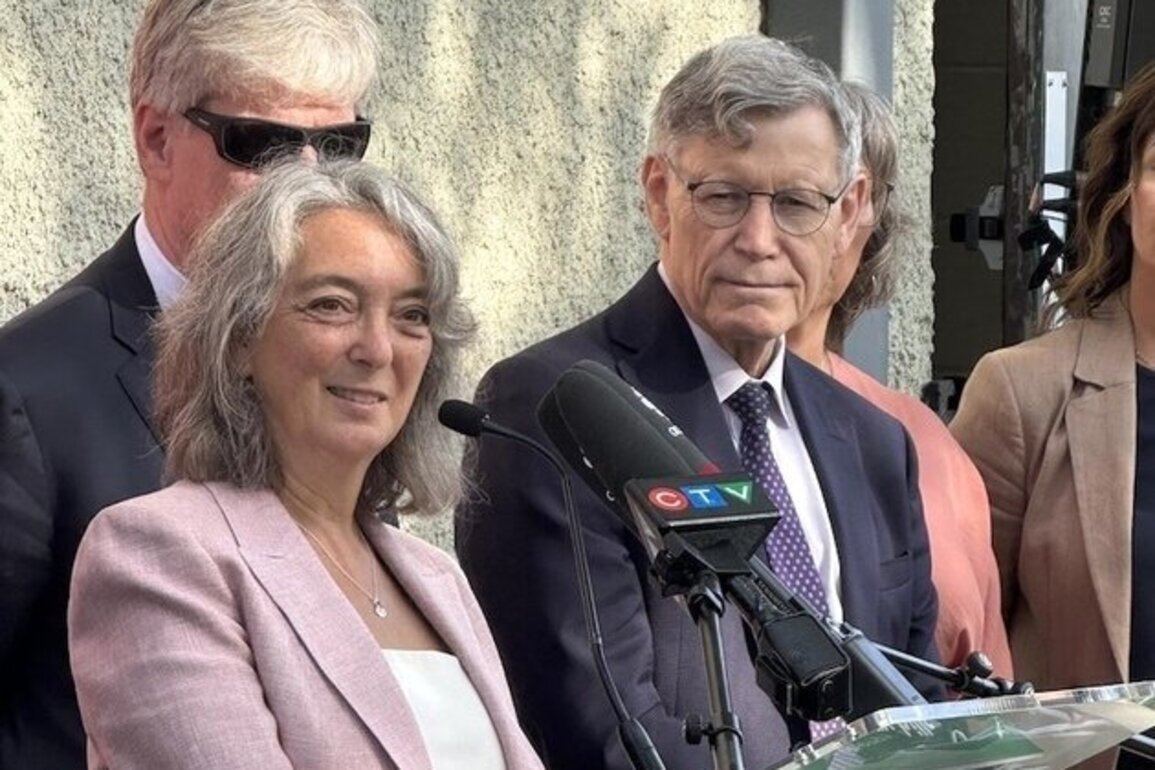
"This announcement is about building the strong economy of the future," Environment Minister Julie Dabrusin told a media conference in Burnaby, B.C. Tuesday. "One that is cleaner, more competitive, and more resilient."
In addition to the new regulations, the government announced it will invest nearly $16 million in methane emission reduction technologies across Canada.
The Intergovernmental Panel on Climate Change identifies methane reductions as one of the cheapest ways to achieve the fastest, deepest reductions in climate pollution by 2030. In a 2024 report, the International Energy Agency said the global investment needed to cut methane emissions by 75% by 2030 would amount to less than 5% of the US$2.4 trillion in net income the oil and gas industry generated in 2023.
The cost of meeting Canada's existing draft methane targets has been pegged at $15.4 billion between 2027 and 2040-less than half the cost of completing the controversial Trans Mountain pipeline expansion.
At the COP28 climate summit in Dubai in 2023, Canada committed to reduce its methane emissions 75% from 2012 levels by 2030. But the sweeping memorandum of understanding (MOU) signed by Prime Minister Mark Carney and Alberta Premier Danielle Smith late last month pushed the deadline back to 2035 and reset the baseline year to 2014-meaning the 75% reduction target will be calculated against a higher level of emissions.
The MOU would see the two orders of government enter into an equivalency agreement before April 1 that allows Alberta to chart its own course to the 75% target, in lieu of direct federal regulation.
Amanda Bryant, senior analyst at the Calgary-based Pembina Institute, said Canada's updated methane regulations are "well-designed" and are the product of an exhaustive, three-year consultation with stakeholders, including the oil and gas industry and producing provinces such as Alberta. But in a release, she said the impact of that design will depend on negotiations under the MOU.
"Unfortunately, the recent memorandum of understanding between Ottawa and Alberta-which surprisingly delayed reductions for Alberta's oil and gas industry by five extra years-makes today's announcement less meaningful than it would otherwise be," Bryant said in a release.
"This is a carveout which, according to our modelling, could result in an additional 1.9 million tonnes of methane into the atmosphere, equivalent to 53 million tonnes of carbon dioxide. That's the same as the annual pollution from roughly half the cars on Canada's roads."
Bryant urged the federal government to use the new federal regulations as the "yardstick" against which it assesses any proposals for reducing methane presented by Alberta during negotiations.
"As by far the largest producer of oil and gas, Alberta is the province where methane regulations would have the greatest effect," she said. "British Columbia is already proving that methane can be reduced without negatively impacting the oil and gas industry."
The Canadian Association of Physicians for the Environment said Tuesday's announcement amounted to "overdue progress" after "years of delay and a troubling retreat" from Canada's earlier methane commitment.
"Every year of delay, and every percentage point of weakened ambition, translates into avoidable harm, particularly for communities already bearing the health burden of fossil fuel extraction." CAPE President Dr. Samantha Green said in a release. "The Alberta-Canada memorandum of understanding effectively proposes to weaken or eliminate various key elements of Canada's climate policy, while expanding fossil fuel infrastructure. This helps contextualize today's announcement: it's a positive step forward, but it takes place at a moment when Canada is taking several leaps backward on climate."
Aly Hyder Ali, oil and gas program manager at Environmental Defence Canada, agreed that the final regulations are welcome, but still fall short of what's needed and possible.
"The federal targets lag behind both technical feasibility and industry commitments," he said in a release. "Major oil and gas companies operating in Canada have already pledged to achieve near-zero methane emissions by 2030, yet the proposed rules do not reflect that level of ambition. Furthermore, these rules will not come into effect until 2028, although the technology to reduce methane emissions is already readily available."
These rules also "allow operators to develop their own methods of controlling methane emissions without clear, enforceable standards," Ali added. "This risks undermining the regulatory certainty that would be otherwise achieved and further weakens Canada's climate credibility."
Rebecca Schulz, Alberta's minister of environment and protected areas, said the province and the federal government agreed to complete the methane equivalency agreement on or before April 1, 2026.
She said she received a letter from Dabrusin this week confirming the timelines and targets in the agreement and the federal government's intent to complete a "long-term equivalency agreement that will give Alberta industry certainty to 2035."
"As we have in the past, Alberta will focus on practical and flexible methane reduction solutions that enable our industry to stay competitive," Schulz said. That recent past includes a recent decision to eliminate the province's regulatory ceiling on natural gas flaring and the climate-busting methane emissions that result, after the industry exceeded those limits over the last two consecutive years, Reuters reported at the time.
"This will include following up on the agreement between the governments to utilize third-party emissions monitoring to provide transparency and certainty to industry," Schulz said.
The main body of this report was first published by The Canadian Press on Dec. 16, 2025.
Source: The Energy Mix