

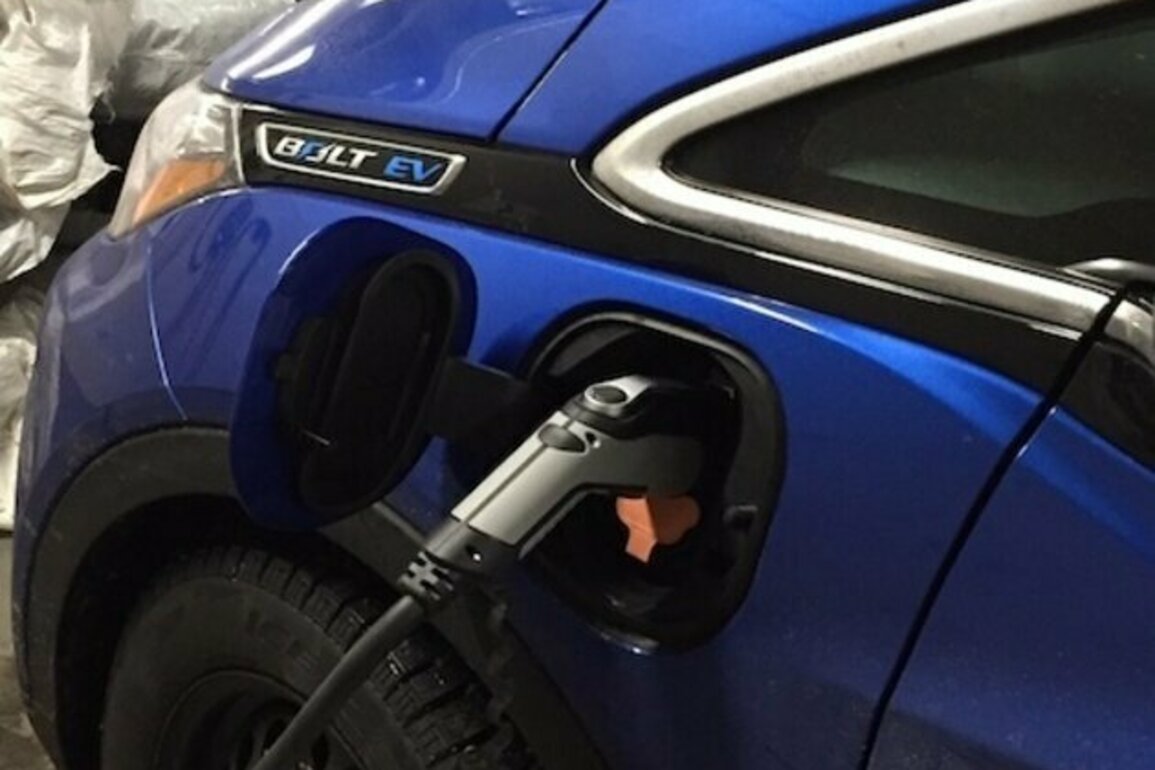
The lack of charging infrastructure in multi-unit residential buildings across Canada is hindering the uptake of electric vehicles, especially among younger homeowners and renters, and governments needs to step up and help eliminate the barrier, a new report urges.
Having access to a charger at home is a deciding factor for an EV purchase, making it essential for policymakers to provide retrofit assistance and enforce policies that ensure chargers are installed in apartments and condos, says [pdf] Simon Fraser University think tank Clean Energy Canada (CEC).
A recent CEC survey conducted with Abacus Data found that 78% of respondents aged 18 to 44 in Metro Vancouver-60% of whom live in multi-unit buildings (MURBs)-are inclined to buy an EV. This contrasts with 63% of those aged 45 and older, 50% of whom live in single-family homes.
Abacus tracked a similar breakdown in Toronto.
But MURB dwellers often face a major hurdle: in 2023, 38% of EV owners living in apartments or condos did not have access to home charging, compared to 2% of single-family homeowners. In the CEC survey, 75% of multi-unit dwellers cited the lack of home charging as a barrier to EV ownership.
"As Canada embarks on a generational housing buildout-with the federal government's new housing plan looking to support nearly four million new homes over the next decade-EV charging needs to be a priority," writes CEC.
Electrical infrastructure for EV chargers must be installed during construction, given that "equipping a new parking space with an EV charger is three to four times cheaper than upgrading an existing one."
While the federal government has played a leading role in supporting public charging networks, it has yet to step up to the plate on home charging. EV-readiness requirements have not been codified in the National Building Code or the Canadian Electrical Code, and "none of the measures in Canada's National Housing Strategy require or incentivize EV readiness in new or retrofitted buildings," CEC writes.
Quebec is leading at the provincial level: its 2023 EV charging strategy mandates that 35% of MURB parking must be EV-ready by 2030. Alone among the provinces and territories, Quebec also has EV readiness requirements for all new single-family to quadruplex homes in its building code, and those rules are set to be extended to large MURBs by the end of this year.
Some municipalities have also made provisions-and gains. Eleven of Montreal's 19 boroughs have EV-readiness bylaws on the books. Meanwhile, "nearly 15 local governments in the Greater Toronto and Hamilton Area have adopted Green Building Standards that include some form of EV-readiness provisions," CEC says.
Out west, 34 municipalities in British Columbia accounting for 70% of the provincial population have EV readiness bylaws in place.
In some other provinces, "right-to-charge" provisions provide some degree of legal cover for households to install chargers at their own cost against the wishes of their condo boards, but Alberta and Saskatchewan "offer no support at all," CEC says.
To prevent a fragmented approach, higher levels of government must take the lead in setting universal EV-readiness requirements, benefiting utilities, developers, and residents alike, CEC writes. A national mandate for 100% EV-readiness in all new MURBs, prioritizing Level 2 chargers, should be a key part of the strategy.
With 34% of Canadians living in MURBs today, governments must also find ways to fund expensive EV retrofits, so renters and condo owners aren't left behind, CEC adds.
Source: The Energy Mix